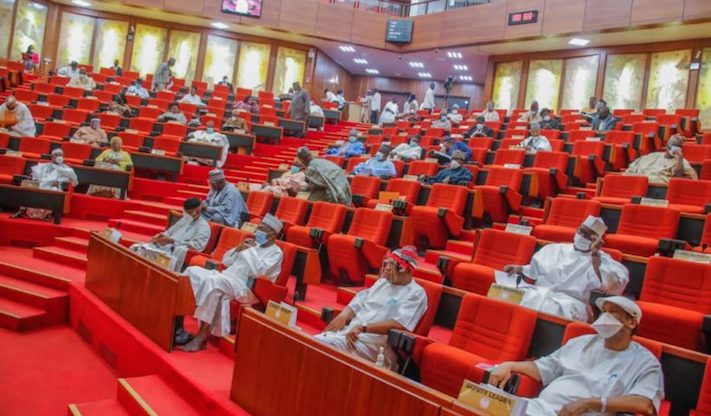
plans for implementing the new Nigerian Tax Reform Act 2025 in local councils have been detailed by the Senate and other key players in Nigeria’s local government administration. These plans are intended to increase local councils’ autonomy, fiscal responsibility, and Internally Generated Revenue (IGR).
Fiscal federalism, the crucial problem of IGR, and local government autonomy are the three main aspects of the Act. The Act, which goes into force in January 2026, mandates that local councils maintain the sacred trust of public service financial management, embrace data-driven policies, and revitalize inactive revenue schemes.
With the theme “building Nigeria from the grassroots and unlocking the promise of the Nigerian Tax Act 2025,” this was the main topic of discussion at the recently concluded Nigerian Local Government Development Summit and Award, which was hosted in Abuja by the Senate Committee on States and Local Governments Administration in partnership with Global Gold Consult Ltd.
The Nigerian Tax Act 2025, according to Senate President Godswill Akpabio, is a bold declaration that will no longer be constrained by antiquated procedures, limited income streams, and crippling reliance on federal funding.
According to Akpabio, “it is a call to modernize and simplify our local governance, and a pathway to fiscal responsibility, equity, and efficiency aimed to advance autonomy for our local councils and generate revenue.”
Akpabio emphasized that the tax law is more closely connected with national growth, as represented by Senator Binos Dauda Yeroe, the Chairman of the Senate Committee on State and Local Government Administration.
“These are actions, not aspirations, and we will move forward with unflinching commitment. We backed measures that give our local government better means to provide services with honor and competence.
“We will strengthen intergovernmental operations, empower communities, and guide the implementation of the Tax with the Senate’s commitment to upholding fiscal federalism, which requires integrity from every level of government,” he declared.
According to Akpabio, the recently passed tax law encourages Nigeria to consider how resources are mobilized, managed, and cultivated throughout all levels of government, encouraging accountability and openness, while also marking a substantial change in the country’s fiscal architecture.
The yearly summit has produced many advantages for the growth of the Nigerian grassroots, according to Engr. Kayode Adegbayo, Managing Director/CEO of Global Group Consult and consultant to the Senate Committee on State and Local Government.
“All efforts must be made to ensure that local government is effectively developed because it is the most important tier of government due to its proximity to the people,” he stated.
“The Supreme Court declared fiscal autonomy of the local government tier through President Bola Tinubu’s efforts, and that pronouncement is already improving the releases of funds into the local system in Nigeria, though not yet fully.”
Professor John Olatunji Alabi, a co-consultant to the organizers, said that President Tinubu’s administration is completely dedicated to using this tax reform act to reengineer IGR and look into alternate sources of funding for local governments.
Additionally, Uche Uwaleke, a professor of capital markets and member of the Presidential Committee on Fiscal Policy and Tax Reforms, stated to reporters, “We believe that these tax reforms, when they are implemented, will go a long way to do that. The whole essence of the tax reforms is to streamline the multiple taxes that we have today, particularly at the local government levels.”
It’s clear that local residents are dissatisfied with the numerous levies, which is limiting enterprises. Therefore, a scenario where there are no more than nine taxes at the local and state levels will be put into place next year. That will greatly facilitate business and make things easier so that local residents can breathe.