By Tope Kolawole
Youths and concerned citizens from the Niger Delta region have demanded the full decentralization of Nigeria’s pipeline surveillance contract during a parliamentary roundtable at the National Assembly.
The group submitted a strongly worded memorandum to the Joint Senate and House Committee on Pipeline Resources, urging lawmakers to end the current single-contractor model which they described as ineffective and counterproductive.
They argued that the existing arrangement has failed to curb crude oil theft and pipeline vandalism despite receiving substantial public funds.
The memorandum, presented under the banner of Concerned Niger Delta Citizens and signed by Comrade Maxwell Efe, painted a grim picture of the Niger Delta’s ongoing crisis.
It noted that the region remains the backbone of Nigeria’s economy yet continues to suffer massive revenue losses, environmental damage, and community hardship due to persistent oil theft.
The group called for immediate legislative action to replace the centralized system with state-level indigenous contractors selected through open and competitive bidding processes.
According to the submission, the current surveillance contract awarded on a monolithic basis to one private entity has demonstrably underperformed since its inception in 2022.
Official figures showed that Nigeria’s crude oil production in January 2026 averaged only 1.46 million barrels per day, missing both the OPEC quota and the federal budget target.
The group warned that such shortfalls, combined with rising incidents of theft and vandalism, are undermining national development priorities and causing billions of dollars in lost revenue.
“The Niger Delta remains the bedrock of Nigeria’s economy, yet the persistent crisis of crude oil theft and pipeline vandalism continues to inflict massive losses on national revenue, environmental integrity, and community livelihoods,” the memorandum stated.
“The current pipeline surveillance contract model, awarded on a monolithic basis to a single private entity, has demonstrably failed to deliver the promised security and production stability.
“This memorandum respectfully urges the National Assembly to initiate immediate legislative and policy action for the full decentralisation of pipeline surveillance to credible indigenous state-level contractors.
“Such a reform is essential to restore accountability, eliminate patronage, and build a resilient, inclusive security architecture capable of safeguarding Nigeria’s strategic economic assets.
“The only viable path forward is the immediate termination of the existing contract and its replacement with a fully decentralised framework. Pipeline surveillance must be devolved to credible indigenous contractors selected through transparent, competitive, and open bidding processes in each oil-producing state.
“These contractors would assume direct responsibility for securing pipelines and installations within their respective jurisdictions, leveraging authentic local intelligence, community knowledge, and grassroots networks that a distant, centralised operator cannot replicate.
“A decentralised system would deliver genuine competition to drive efficiency and innovation, equitable distribution of economic opportunities across states and communities, and stronger integration with federal security forces.”
Industry estimates cited in the memorandum placed annual losses from oil theft and illegal bunkering at up to 15 billion dollars or more. Since the commencement of the current surveillance arrangement, credible assessments indicated losses exceeding 2.5 trillion naira, with daily theft still averaging 180,000 barrels.
Pipeline breaches reportedly increased by 62 percent while vandalism incidents rose sharply from 312 cases in 2023 to over 500 last year.
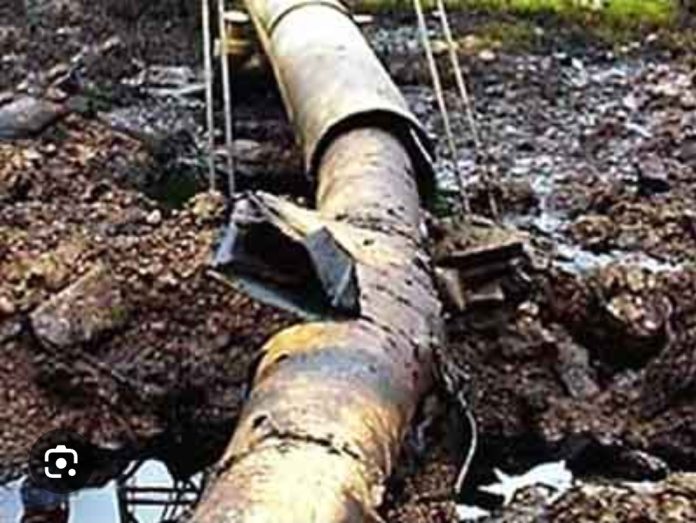
The group highlighted that over 700 major spillages occurred in the last 18 months alone, causing pollution levels to surge by 68 percent and devastating farmlands and fishing grounds across more than 450 communities.
They stressed that criminal networks have adapted to the existing model by relocating operations to new areas, including urban peripheries and previously unaffected states.
This situation, according to the submission, shows clearly that the centralized approach has not reduced theft but has instead allowed it to persist and expand.
The memorandum also pointed out structural defects in the current arrangement, describing it as a personality-driven monopoly that concentrates billions of naira annually in the hands of one private company.
It raised concerns over the contractor’s background as a former militant leader and alleged attempts to shift blame onto the Nigerian Armed Forces and Navy, actions which the group said erode public confidence in national security institutions and create unnecessary divisions.
“The centralised, personality-driven contract has created an unacceptable monopoly that concentrates billions of naira annually in the hands of one private company. This arrangement breeds conflict of interest, given the contractor’s historical background as a former militant leader who previously orchestrated disruptions to oil infrastructure,” the document noted.
“Public suspicion of private enrichment is heightened by reports of luxury asset acquisitions and the extraordinary concentration of public funds within a narrow circle.
“Equally damaging is the contractor’s repeated public attempts to shift blame onto the Nigerian Armed Forces and the Nigerian Navy.
“Allegations of military obstruction, complicity in bunkering, and deliberate sabotage of surveillance operations have been categorically rejected by the Defence Headquarters as unfounded. Such statements erode public confidence in the nation’s security institutions and undermine operational coordination.
“The model also sidelines established security agencies such as the Joint Task Force and the Nigerian Navy, while creating dangerous rivalries among former militant leaders, indigenous security firms, and community stakeholders. A single point of failure exposes the entire system to immediate exploitation by criminal syndicates. This privatisation of core national security functions further contradicts principles of federalism, sovereignty, and institutional accountability enshrined in the Petroleum Industry Act.”
The Concerned Niger Delta Citizens maintained that decentralisation would bring multiple strategic advantages, including the deployment of advanced technologies such as AI-powered monitoring, drone fleets, and real-time digital metering systems under government control.
They emphasized that the new model would allow the Nigerian Navy and Joint Task Force to focus on enforcement while state-level contractors handle ground surveillance.
Rigorous performance benchmarks backed by independent audits and legislative oversight would also be introduced to ensure accountability.
The group urged the National Assembly to conduct a comprehensive review of the contract’s performance since 2022 and recommend its immediate termination without any renewal, extension, or variation.
They called for new legislation that would mandate full decentralisation to state-level indigenous contractors through competitive bidding.
Additionally, the memorandum proposed the establishment of a joint oversight mechanism involving the National Assembly, relevant ministries, and security agencies to monitor implementation.