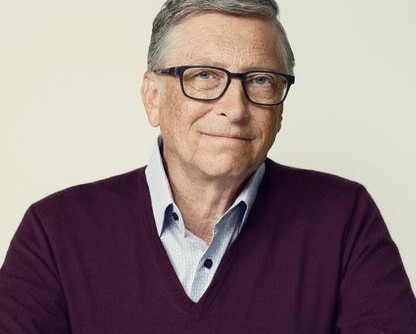
In his 10th Goalkeepers letter released a week before the global event that celebrated innovations in the attainment of the Sustainable Development Goals (SDG) in New York, global philanthropist and chairman of the Gates Foundation, Bill Gates announced he would be spending $1billion to expand “access to artificial intelligence and the AI-enabled solutions, opportunities, and knowledge that have too often been out of reach for many around the world,” over the next two years.
The report titled: Make This Matter: AI, Equity, and the Choice We Can’t Delay, makes the case for AI deployment that would prioritise distribution and language gap. Gates speaking at the Goalkeepers event said: “Today, we announce that 60 organisations have come together to help more than three billion people use high-quality AI in their own language.”
Gates said the goal is to support the over three billion people whose language is not understood by AI today in the belief that the world can revive “incredible services and close the equity gap,” if more people can use AI for health and economic development in their own language.
While the organisations partnering with the Gates Foundation are not all known, Africa’s telecommunications giant, MTN will be part of the partnership for Nigeria. However, while this may look impressive on paper, there are concerns from players in the tech industry about the motive and the control of this innovation.
According to Abel Adaga, who works in one of the start-ups in Nigeria’s capital, Abuja, the issue of control and ownership must be taken seriously. “Currently over 90 percent of the large language models was written in English, which is the general business language of the world, I do not see the need to breakdown AI in multi languages that cannot be sustained.
“But the more important question is who is in charge of this and what would dictate the terms, algorithms and all. What would be the role of African tech builders who own the languages and are they going to be given the free hand to work? These are questions that we need to take note of,” he said.
Another expert, Solomon Iorliam who spoke to our correspondent said there are more problems facing small holder farmers, start-ups and small business owners in Africa that AI cannot solve.
He said : “I do not believe this is the next thing to do. There is much digital divide between the people who are supposed to benefit from this initiative and those who are proposing it. Gates has money and I am not sure he understands what the people at the grassroots needs.
“Farmers need fertiliser, small loans and modern farming equipment to increase yield and help reduce hunger in the land; healthcare needs trained nurses and availability of drugs. If you look at most of the over 10,000 primary health care centres in Nigeria, how many of them are functional and how many even have conducive environment to operate, what they need now is not AI,” he concluded.
Checks by our correspondent reveal that this new announcement is building on a previous $50 million Horizon 1000 programme earlier launched by the Gates Foundation and Open AI. The programme aims to equip 1,000 primary healthcare centres in Africa with AI tools to improve delivery by 2028. The initiative will begin in Rwanda and would also equip 200 million small holder farmers in sub-Saharan Africa and South Asia.
Speaking with our correspondent, Victoria Chizaram, a smallholder woman farmer and member of the Women Farmers Association which boasts 5 million memberships said the initiative is putting a “round peg in a square hole.”
“Did anyone talk with us small holder farmers to know what we need before deciding for us what can help us. The last time, they introduced some foreign seeds which made life difficult for us and cut our productivity and now they are talking about AI, how is it going to work, will it give us interest free loans, will it give us land to farm, are we going to have access to markets and would we determine our prices, these are the things we need to know before we take whatever they are bringing,” Victoria said.
Efforts to get the comments of Nigeria’s Minister for Communications and Digital Economy, Bosun Tijani proved abortive as he was also at the Goalkeepers event in New York and has yet to return to Nigeria at the time of filing this report.